
In today's digital landscape, the security of health data is paramount. With the increasing use of cloud technology, it is crucial to implement the best practices for securing sensitive information. This article delves into the key strategies and measures that organizations can adopt to safeguard health data effectively.
Importance of Securing Health Data in the Cloud
Protecting sensitive health data is critical in the healthcare industry to maintain patient confidentiality, uphold trust, and comply with regulations.
Potential Risks of Inadequate Security Measures
- Data Breaches: Inadequate security measures can lead to unauthorized access to patient information, resulting in breaches that compromise privacy and confidentiality.
- Identity Theft: Stolen health data can be used for identity theft, causing financial and reputational damage to individuals.
- Legal Consequences: Healthcare organizations can face legal repercussions, fines, and lawsuits for failing to protect patient data adequately.
Examples of Data Breaches in the Healthcare Industry
- 2015 Anthem Breach: A cyberattack on Anthem Inc. exposed the personal information of nearly 80 million individuals, including names, birthdates, Social Security numbers, and medical IDs.
- 2017 WannaCry Ransomware Attack: The global ransomware attack affected healthcare organizations worldwide, disrupting operations and compromising patient data security.
- 2020 Blackbaud Breach: Nonprofit organizations, including healthcare providers, were impacted by a data breach at Blackbaud, a cloud software provider, resulting in the exposure of donor and patient information.
Best Practices for Encrypting Health Data

When it comes to securing health data in the cloud, encryption plays a crucial role in maintaining data privacy and confidentiality. By implementing strong encryption methods, healthcare organizations can protect sensitive information from unauthorized access or breaches.
Encryption Methods for Securing Health Data in the Cloud
One of the most commonly used encryption methods for securing health data in the cloud is AES (Advanced Encryption Standard). AES is a symmetric encryption algorithm that ensures data confidentiality by using a shared key for both encryption and decryption.
This method is widely accepted and considered secure for protecting sensitive healthcare information.
Another encryption method that is often used in healthcare data protection is RSA (Rivest-Shamir-Adleman). RSA is an asymmetric encryption algorithm that uses a public key for encryption and a private key for decryption. This method is particularly useful for securely exchanging encryption keys between parties.
Compare Different Encryption Algorithms Suitable for Healthcare Data Protection
- AES (Advanced Encryption Standard): Widely accepted and secure symmetric encryption algorithm.
- RSA (Rivest-Shamir-Adleman): Asymmetric encryption algorithm for secure key exchange.
- SHA-256 (Secure Hash Algorithm 256-bit): Cryptographic hash function for data integrity verification.
- Triple DES (Data Encryption Standard): Symmetric encryption algorithm for enhanced security.
Discuss the Role of Encryption Keys in Maintaining Data Privacy
Encryption keys are essential for maintaining data privacy in the cloud. These keys are used to encrypt and decrypt sensitive information, ensuring that only authorized parties can access the data. By securely managing encryption keys and implementing proper key management practices, healthcare organizations can prevent data breaches and unauthorized access to patient information.
Access Control and Authorization
Access control is a critical aspect of securing health data in the cloud, as it helps prevent unauthorized access to sensitive information. By implementing access control measures, organizations can ensure that only authorized personnel can view, modify, or delete health data, reducing the risk of data breaches and ensuring compliance with data protection regulations.
Role-based Access Control
Role-based access control (RBAC) is a commonly used access control mechanism that restricts system access based on the roles of individual users within an organization. In the context of health data stored in the cloud, RBAC can help ensure that only healthcare professionals with the necessary permissions can access patient records or sensitive medical information.
By assigning specific roles to users and granting appropriate permissions based on those roles, organizations can enforce access control policies and prevent unauthorized access to health data.
Authorization Policies for Preventing Unauthorized Access
Authorization policies play a crucial role in preventing unauthorized access to sensitive health data in the cloud. By defining who has access to what data and under what circumstances, organizations can control and monitor the flow of information within their systems.
Authorization policies can specify which users are allowed to access certain types of data, at what times, and from which devices. By enforcing strict authorization policies, organizations can reduce the risk of unauthorized access to health data and protect patient privacy and confidentiality.
Data Backup and Disaster Recovery
Data backup and disaster recovery are crucial components of securing health data in the cloud. Ensuring data integrity and availability is essential to prevent data loss and maintain the confidentiality of sensitive health information.
Importance of Data Backup
- Regular data backups help in recovering information in case of accidental deletion, corruption, or cyberattacks.
- Having multiple copies of data stored securely offsite reduces the risk of permanent data loss.
- Compliance regulations often require healthcare organizations to have backup systems in place to protect patient data.
Best Practices for Implementing Backup Strategies
- Automate backups to ensure regular and consistent data protection without human error.
- Encrypt backup data to maintain confidentiality and prevent unauthorized access.
- Regularly test backups to ensure they can be restored successfully in case of an emergency.
Role of Disaster Recovery Plans
- Disaster recovery plans Artikel procedures to follow in the event of a data breach, natural disaster, or system failure.
- Having a well-defined plan helps minimize downtime and ensures quick recovery of critical health data.
- Regularly update and test disaster recovery plans to adapt to evolving threats and technology changes.
Compliance with Regulations (e.g., HIPAA)
Securing health data in the cloud is not just a matter of best practices; it is also a legal requirement. The Health Insurance Portability and Accountability Act (HIPAA) sets the standard for protecting sensitive patient data. Any organization that deals with protected health information (PHI) must ensure that their cloud technology meets HIPAA compliance standards.
Regulatory Requirements for Securing Health Data
- Encryption: HIPAA requires that all PHI be encrypted both in transit and at rest in the cloud to prevent unauthorized access.
- Audit Trails: Organizations must maintain detailed audit logs of all access to PHI in the cloud to track who has viewed or modified the data.
- Access Controls: HIPAA mandates strict access controls to ensure that only authorized personnel can view or modify PHI in the cloud.
How Cloud Technology Helps with HIPAA Compliance
- Secure Infrastructure: Cloud service providers offer robust security measures, such as firewalls, intrusion detection systems, and data encryption, to help organizations meet HIPAA requirements.
- Regular Audits: Cloud providers undergo regular security audits and certifications to ensure compliance with HIPAA and other regulations, saving organizations time and resources.
- Business Associate Agreements: Cloud providers can sign Business Associate Agreements (BAAs) with healthcare organizations, outlining their responsibilities in safeguarding PHI and ensuring compliance with HIPAA.
Consequences of Non-Compliance
- Financial Penalties: Organizations that fail to comply with HIPAA regulations face hefty fines, which can range from thousands to millions of dollars, depending on the severity of the violation.
- Reputation Damage: Non-compliance with healthcare data protection laws can lead to a loss of trust among patients and partners, damaging the organization's reputation in the industry.
- Litigation Risks: Non-compliance may result in lawsuits from affected individuals, leading to costly legal battles and further tarnishing the organization's image.
Ultimate Conclusion
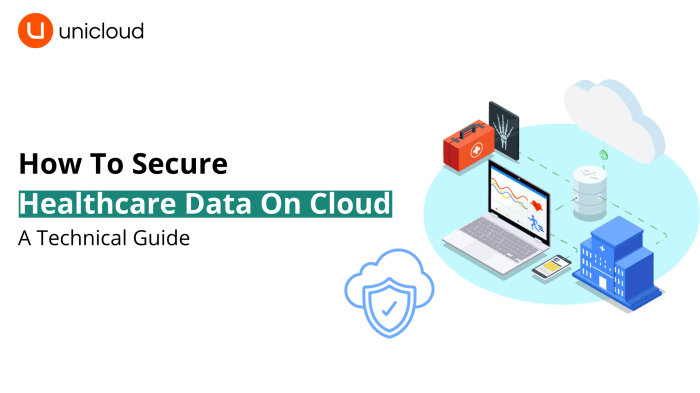
As we conclude this discussion on best practices for securing health data with cloud technology, it is evident that a proactive approach is essential in safeguarding sensitive information. By following the recommended guidelines and leveraging the latest technologies, organizations can ensure data protection and maintain trust with patients and stakeholders.
FAQ Guide
How important is it to encrypt health data in the cloud?
Encrypting health data in the cloud is crucial to prevent unauthorized access and maintain data privacy. It adds an extra layer of security to sensitive information.
What are the best practices for data backup in the healthcare industry?
Implementing regular data backups and having a robust disaster recovery plan are essential practices to ensure data integrity and availability in case of unexpected events.
How can cloud technology help organizations comply with regulations like HIPAA?
Cloud technology offers secure storage and transmission of health data, making it easier for organizations to adhere to regulatory requirements such as HIPAA.